
Naming Acids Worksheet: A Complete Guide for Students and Teachers
Learning how to name acids is a key milestone in chemistry education, especially in middle school and high school science. A Naming Acids Worksheet helps students practice chemical naming rules in a structured, confidence-building way. Whether you’re a teacher preparing lessons, a homeschool parent, or a student revising for exams, this guide explains how naming acids worksheets work, why they matter, and how to use them effectively.
Understanding the Basics of Acid Naming
A Naming Acids Worksheet usually begins with the fundamentals of what acids are and how they are classified. In chemistry, acids are substances that release hydrogen ions (H⁺) when dissolved in water. Most acid names are based on the anion attached to hydrogen, which is why understanding ionic compounds is essential before tackling acid naming.
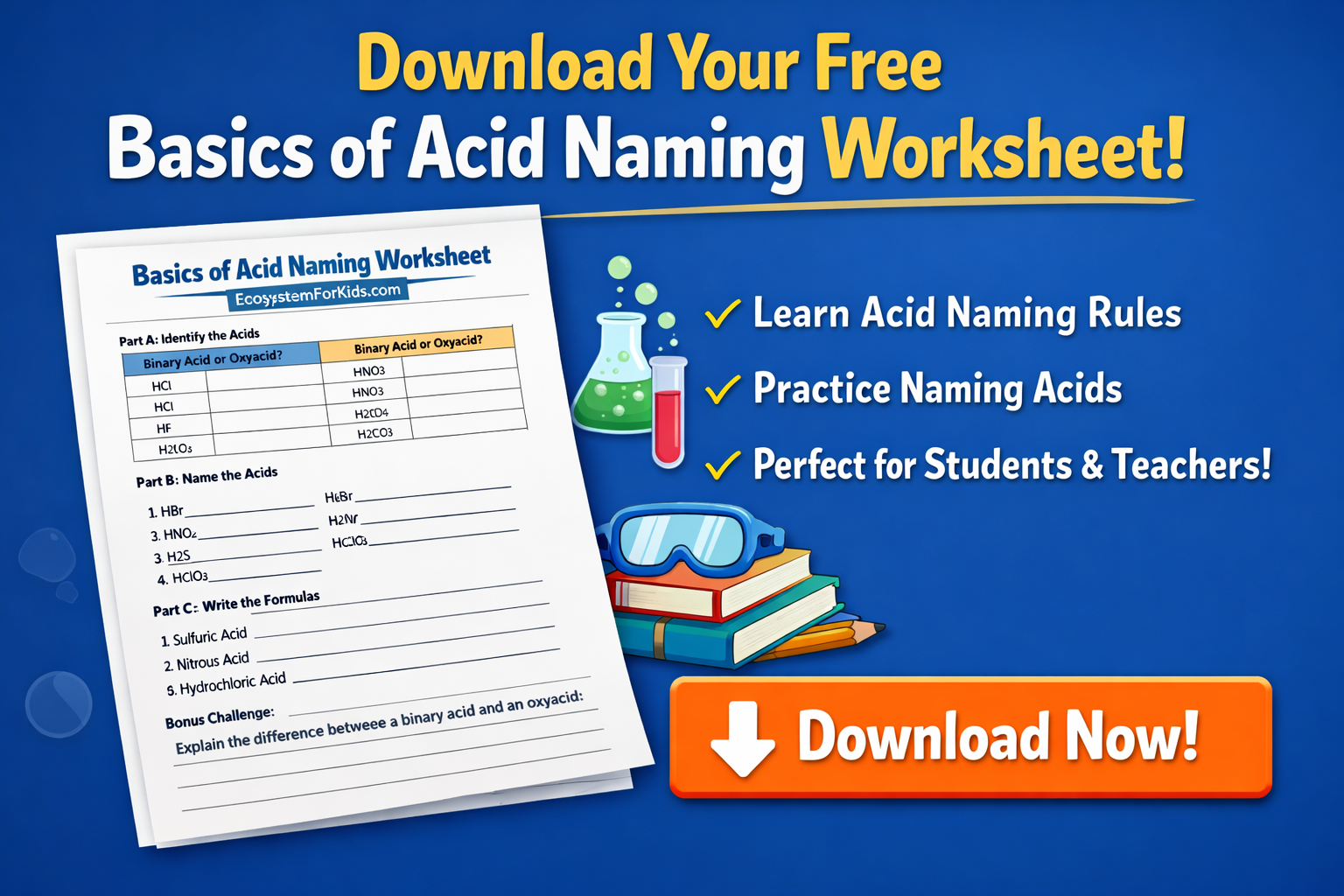
There are two main categories students encounter in a naming acids worksheet: binary acids and oxyacids. Binary acids contain hydrogen and one other nonmetal element, such as chlorine or sulfur. These acids are named using a simple formula: the prefix “hydro–”, followed by the root of the nonmetal, and ending with “–ic acid.” For example, HCl becomes hydrochloric acid, and H₂S becomes hydrosulfuric acid. Worksheets often include matching activities or fill-in-the-blank questions to reinforce this pattern.
Oxyacids, on the other hand, contain hydrogen, oxygen, and another element (usually a nonmetal). Their names depend on the polyatomic ion present. If the ion ends in –ate, the acid name ends in –ic acid. If the ion ends in –ite, the acid name ends in –ous acid. A naming acids worksheet might ask students to convert nitrate into nitric acid or sulfite into sulfurous acid, helping them see the relationship between ions and acids.
By working through repeated examples, students begin to recognize naming patterns rather than memorizing isolated facts. This is why a well-designed naming acids worksheet is more effective than simple note-taking—it encourages active learning and pattern recognition.
Types of Naming Acids Worksheets Used in Classrooms
A high-quality Naming Acids Worksheet comes in many formats, each serving a specific learning goal. Some worksheets focus purely on identification, asking students to name acids based on chemical formulas. Others reverse the process, requiring students to write formulas from acid names. This two-way practice strengthens understanding and reduces common exam mistakes.
Introductory worksheets often use guided practice. These include examples at the top, followed by similar questions with hints. For instance, a worksheet might remind students that “–ate becomes –ic” before asking them to name HNO₃ or H₂SO₄. This scaffolding is especially helpful for beginners who are just learning chemistry vocabulary.
More advanced naming acids worksheets include mixed practice, where students must first identify whether a compound is an acid, then decide whether it is binary or an oxyacid, and finally apply the correct naming rule. These worksheets may also include trick questions, such as compounds that start with hydrogen but are not acids, helping students develop critical thinking skills.
Teachers often use differentiated worksheets to support learners at different levels. Some naming acids worksheets include visual aids, charts, or color-coded ions for visual learners. Others include word problems or real-world contexts, such as acids found in food or industry, to make learning more engaging. Digital worksheets, printable PDFs, and self-grading online versions are also increasingly popular in modern classrooms.
By choosing the right type of naming acids worksheet, educators can align instruction with curriculum standards while keeping students motivated and challenged.
How Naming Acids Worksheets Improve Chemistry Skills
Using a Naming Acids Worksheet goes beyond memorizing names—it builds core chemistry skills that students rely on throughout their academic journey. One of the biggest benefits is reinforcing the connection between chemical formulas and chemical names. This skill is essential not only in chemistry exams but also in laboratory work and advanced science courses.
Naming acids worksheets also strengthen pattern recognition. Students learn to associate suffixes like –ate and –ite with corresponding acid names, which reduces confusion and speeds up problem-solving. Over time, this automatic recognition allows students to focus on higher-level concepts rather than basic recall.
Another key benefit is confidence. Many students find chemical naming intimidating at first, but repeated worksheet practice breaks the topic into manageable steps. As students complete more naming acids worksheets, they become more comfortable and less likely to panic when encountering unfamiliar formulas on tests.
For teachers, naming acids worksheets provide a clear way to assess understanding. Quick checks, homework assignments, quizzes, and review packets all benefit from well-structured worksheets. Errors can be easily identified, allowing targeted feedback and reteaching where necessary. For homeschool parents, worksheets offer structure and measurable progress without requiring advanced chemistry expertise.
In exam preparation, especially for standardized tests, a naming acids worksheet helps students avoid common pitfalls, such as confusing hydrochloric acid with chloric acid or misnaming sulfur-based acids. Regular practice ensures accuracy and builds long-term retention.
Tips for Using Naming Acids Worksheets Effectively
To get the most value from a Naming Acids Worksheet, it’s important to use it strategically rather than as busywork. One effective approach is to introduce naming rules first using a simple chart, then immediately reinforce them with a worksheet. This ensures students apply knowledge while it’s fresh.
Another tip is to encourage students to say acid names out loud while working. Verbal repetition reinforces memory and helps students internalize naming patterns. Pairing worksheets with flashcards or mini-quizzes can also boost retention.
Teachers can enhance learning by using naming acids worksheets as collaborative activities. Group work, peer correction, or classroom discussions about tricky questions help students learn from one another. For independent learners, answer keys and step-by-step explanations are invaluable.
Finally, revisiting naming acids worksheets before tests or exams is highly effective. Even short review sessions can dramatically improve accuracy and speed. When combined with consistent practice, worksheets turn acid naming from a confusing topic into a reliable strength.
FAQ
What is a Naming Acids Worksheet?
A Naming Acids Worksheet is a practice resource that helps students learn how to name acids correctly based on their chemical formulas and naming rules.
What grade level uses naming acids worksheets?
Naming acids worksheets are commonly used in middle school, high school chemistry, and introductory college chemistry courses.
What are the main types of acids covered in these worksheets?
Most naming acids worksheets cover binary acids and oxyacids, focusing on suffix rules like –ate to –ic and –ite to –ous.
Why is naming acids important in chemistry?
Correctly naming acids is essential for understanding chemical reactions, lab safety, exams, and advanced chemistry topics.
Can naming acids worksheets be used for homeschooling?
Yes, they are excellent tools for homeschool instruction because they provide structure, practice, and clear learning outcomes.