
What Should a 1st Grader Know in Math?
Many parents, homeschoolers, and teachers ask the same important question: what should a 1st grader know in math? First grade is a major transition year where children move from early math exposure into structured mathematical thinking. The skills learned during this year form the backbone for success in later grades, especially in problem-solving, reasoning, and number fluency.
By the end of 1st grade, students are expected to understand numbers more deeply, solve addition and subtraction problems with confidence, work with basic measurement and time, and recognize shapes and patterns in their environment. This guide breaks down exactly what a 1st grader should know in math, aligned with common curriculum standards and classroom expectations.
By the end of 1st grade, students are expected to understand numbers more deeply, solve addition and subtraction problems with confidence, work with basic measurement and time, and recognize shapes and patterns in their environment.
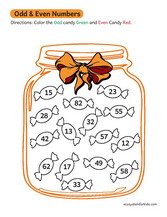
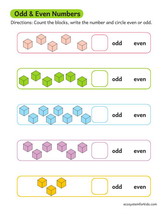
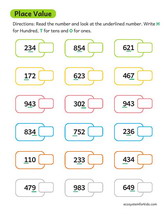
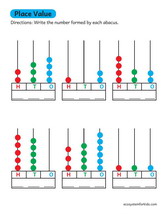
Number Sense and Place Value Skills
When answering what should a 1st grader know in math, number sense is the most critical foundation. Number sense goes beyond memorization — it’s about understanding how numbers work and relate to each other.
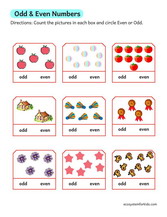
A 1st grader should be able to count forward to at least 100 by ones, and many curricula also encourage counting by 2s, 5s, and 10s. Students should read, write, and recognize numbers up to 100 and understand that numbers represent quantities. This includes counting real objects accurately and matching numbers to sets.
Place value is introduced formally in first grade. Students learn that two-digit numbers are made up of tens and ones. For example, they should understand that:
-
23 = 2 tens and 3 ones
-
40 = 4 tens and 0 ones
This understanding prepares children for addition and subtraction with larger numbers later on. First graders also begin comparing numbers using symbols and language such as greater than (>), less than (<), and equal to (=).
Another key expectation is ordering numbers. Students should be able to place numbers on a number line, identify which number comes before or after, and recognize patterns in counting. These skills strengthen mental math and confidence.
Addition and Subtraction Foundations
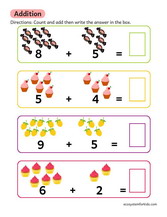
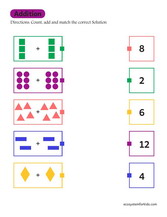
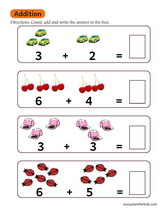
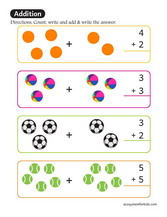
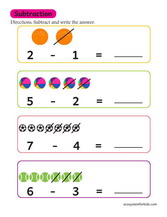
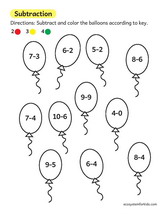
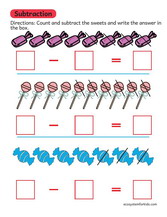
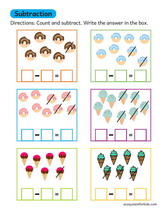
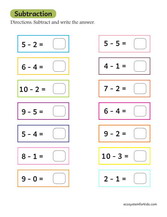
Addition and subtraction are at the heart of what should a 1st grader know in math. By the end of first grade, students are expected to add and subtract within 20 with growing fluency.
First graders learn addition as combining groups and subtraction as taking away, comparing, or finding what is missing. They use hands-on tools such as counters, number lines, drawings, and mental strategies to solve problems.
Examples of expected skills include:
-
Solving equations like 9 + 6, 15 − 7, and 10 + 4
-
Understanding fact families (e.g., 3 + 5 = 8, 8 − 3 = 5)
-
Recognizing that addition and subtraction are related
Word problems play a major role in first grade math. Students should be able to listen to or read a short math story, decide whether it requires addition or subtraction, and explain their reasoning using words, drawings, or numbers.
Fluency does not mean speed alone. It means accuracy, understanding, and flexibility. Strong addition and subtraction skills in 1st grade prepare students for multi-digit operations in later grades.
Measurement, Time, and Money Concepts
Another important part of what should a 1st grader know in math involves real-world measurement and daily life skills.
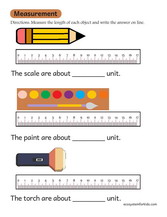
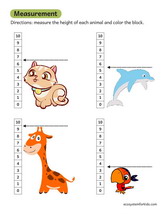
First graders begin measuring objects using non-standard units such as blocks or paper clips. They learn to compare lengths, weights, and capacities using words like longer, shorter, heavier, and lighter. Many classrooms also introduce basic standard units such as inches and centimeters.
Time is a key first-grade concept. Students should be able to:
-
Tell time to the hour and half hour
-
Read both analog and digital clocks
-
Understand daily routines and time sequences
Money skills are introduced using coins. First graders should recognize pennies, nickels, dimes, and quarters and know their values. They practice counting simple amounts and understanding that money is used to buy goods and services.
These concepts help children see math as practical and meaningful, reinforcing learning through everyday experiences.
Geometry, Shapes, and Data Skills
Geometry and data round out the expectations for what should a 1st grader know in math. At this stage, students explore shapes visually and begin analyzing information.
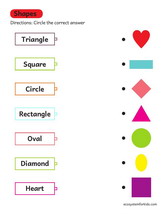
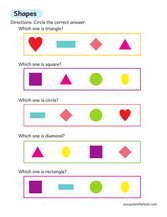
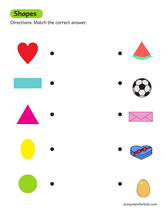
First graders should recognize and name 2D shapes such as circles, squares, rectangles, and triangles, as well as 3D shapes like cubes, spheres, cones, and cylinders. They learn to describe shapes by their attributes, including sides, corners, edges, and faces.
Students also explore equal parts by dividing shapes into halves and quarters, an early introduction to fractions.
Data skills are introduced through simple graphs. Children may create picture graphs or bar graphs and answer questions such as:
-
Which group has more?
-
Which has fewer?
-
How many in total?
These activities develop reasoning, comparison skills, and early data literacy.
FAQ: What Parents Ask About 1st Grade Math
What math level should a 1st grader be at?
A 1st grader should understand numbers up to 100, add and subtract within 20, tell time to the hour and half hour, and recognize basic shapes and coins.
Is it normal if my child struggles with math in 1st grade?
Yes. Children develop at different rates. With consistent practice, visual aids, and encouragement, most students improve steadily.
Should a 1st grader memorize math facts?
Memorization is helpful, but understanding is more important. Fluency comes from practice and comprehension, not pressure.
How can I help my child at home?
Use everyday activities like cooking, shopping, and games to reinforce counting, measuring, and problem-solving skills.
1st Grade Math Skills Checklist
By the end of 1st grade, most students should be able to:
-
Count to 100 and recognize numbers
-
Understand tens and ones
-
Add and subtract within 20
-
Solve simple word problems
-
Tell time to the hour and half hour
-
Recognize coins and their values
-
Identify basic 2D and 3D shapes
-
Read and create simple graphs
Final Thoughts
Understanding what should a 1st grader know in math empowers parents and educators to support children effectively. First grade is not about perfection — it’s about building confidence, curiosity, and a strong mathematical foundation. With the right guidance and consistent practice, children can develop skills that will support them for years to come.